 Deckline Decks
 Hardwood Decks
Hardwood is the warm, classic deck, and it lives or dies on what is under it. We set the footings and frame to suit the board and the height before a single board goes down, because a deck that bounces or sags is a substructure problem, not a board problem. Merbau, spotted gum or blackbutt, the grade named on the quote, priced honestly by the m².
What this job includes.
- ✓Merbau, spotted gum and blackbutt decks, new and replacement
- ✓Footings concreted to depth and joists spaced for the board
- ✓Boards screwed or hidden-fixed at the right gap for drainage
- ✓Matching or extending an existing hardwood deck
- ✓Oiling or finishing, and old-deck removal itemised on the quote
What “hardwood” actually means on a quote
A vague “hardwood deck” is the easiest line for a cheap operator to hide behind. Merbau, spotted gum, blackbutt and ironbark all behave differently. They have different grades, different oils to maintain them, and different prices per linear metre. We name the species and the grade on every quote: not “hardwood”, but “Standard & Better merbau, 90 by 19 mm, square dressed”. That way the line on our quote is the same line on the supplier’s invoice, and a $390 per m² deck is comparable to a $470 per m² deck rather than guessed at.
Where hardwood quotes split
Two hardwood quotes for the same deck can be more than $5,000 apart. Usually the gap is hidden in the substructure rather than the board. Joists at 600 mm centres ride lighter than joists at 450 mm centres, but the boards bounce on 600s as the deck ages. Posts on saddle plates above grade outlast posts buried straight into the ground by a decade. Ledger boards flashed properly outlast ledgers bolted straight to the cladding by a lot longer than that. The cheap quote saves money by spreading the joists, skipping the flashing and using a shorter post. The price difference is real and visible on the quote, line by line.
What an itemised hardwood deck includes
- The area in m², the species, the grade and the board profile, each named
- The substructure: footing depth, post size, bearer and joist spacing called out
- Ledger board and flashing where the deck meets the house
- Balustrade to the NCC if the deck is over a metre up
- Fixings (stainless or hot-dip galvanised, the grade named for coastal blocks)
- Pre-oiling before laydown, and the first coat after install
- A 10-year warranty on footings, bearers and posts, in writing
Anything we find on the day, like rot in an existing ledger or a footing the old deck never had, is quoted in writing before we proceed. Nothing moves the price without your say-so.
Priced by the m², itemised line by line.
The area in m² and the board and grade named, the footing depth and the bearer and joist spacing, the posts, the ledger flashing where the deck meets the house, the balustrade to the NCC, the stairs and any council approval. Not one round number for a deck.
- 1 Area in m², board and grade named. The price set by the m², with the board and its grade named: merbau or spotted gum, the composite brand, or H3 and H4 treated pine. Not one round number for "the deck".
- 2 The substructure, in full. The footing depth, the bearer and joist spacing, and the posts, sized for the height and the ground. This is the hidden frame that holds the deck up, and the line cowboys skip.
- 3 Ledger board and flashing to the house. Where the deck bolts to the house, the ledger board and its flashing, stated and detailed, because that join is what keeps water out of your wall.
- 4 Balustrade spec to the NCC. If the deck is over a metre up, the balustrade named to the NCC: timber, metal or glass, at least a metre high with gaps under 125 mm, so it passes rather than gets pulled up.
- 5 Stairs. Any stairs their own line: the rise, the run and the landing, built and balustraded to suit the height, not folded into a round number.
- 6 Council approval or CDC note. A plain note on which approval path the deck falls under, exempt, a Complying Development Certificate or a DA, so you know before we build, not after.
- 7 Warranty and finish. The 10-year footings, bearers and posts warranty in writing, the composite manufacturer warranty or the timber oil and coating, and how the finish is handled.
What happens, step by step.
Site measure and set-out
We measure the space, check the ground, the falls and the height, talk through board and balustrade, mark the set-out, then put a written by-the-m² quote in your hands.
Footings and posts
We dig and concrete the footings to depth, sized for the height and the ground, and set the posts plumb. The footings cure before any load goes on them. This is the substructure that holds the deck up.
Bearers and joists
The bearers and joists go on at the correct spacing for the board, closer together for composite, so the deck stays flat and never bounces. The frame is the deck; the boards are the finish.
Ledger and flashing
Where the deck meets the house we fix and flash the ledger board properly, so the join carries the load and keeps water out of your wall instead of bolting straight on.
Boards down
The boards go down at the right gap for drainage, screwed or hidden-fixed to the joists, raked and trimmed clean. Merbau, treated pine or the named composite, exactly as quoted.
Balustrade, stairs, oil and handover
We build the balustrade to the NCC and the stairs to suit the height, oil or finish the timber, clear the site, walk you around, and hand over the warranty and any compliance paperwork in writing.
The paperwork behind the price.
Public liability to $20M, and a 10-yr substructure warranty, all in writing, all on request.
Every deck is priced by the m², with the board and its grade named on the quote, the merbau or spotted gum, the composite brand, or H3 and H4 treated pine, and the substructure itemised: the footing depth, the bearer and joist spacing, the posts, and the ledger flashing where the deck meets the house. Any balustrade is built and named to the NCC. We hold a NSW Fair Trading building licence (000000C) and carry public liability insurance to $20M, and the guarantee is a 10-year written warranty on the footings, bearers and posts, the part that holds the deck up and the part cowboys skimp, plus the genuine composite manufacturer materials warranty where the boards are Trex, Modwood or Ekodeck. Deckline Decks is a composite reference site, so the licence number, ABN and contact details are illustrative placeholders, not a real operator; on a live build these are the real, verifiable credentials of the business.
Hardwood Decks jobs we’ve done.
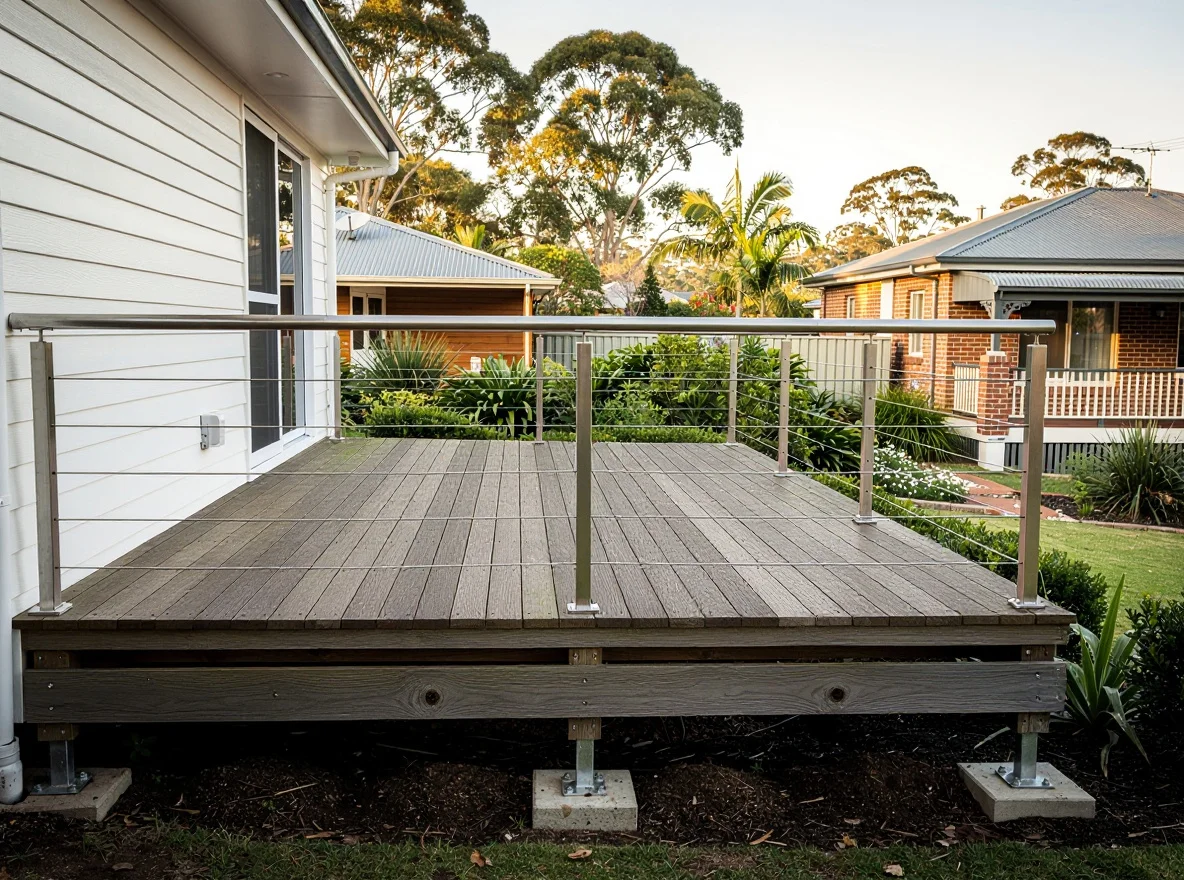 Before
 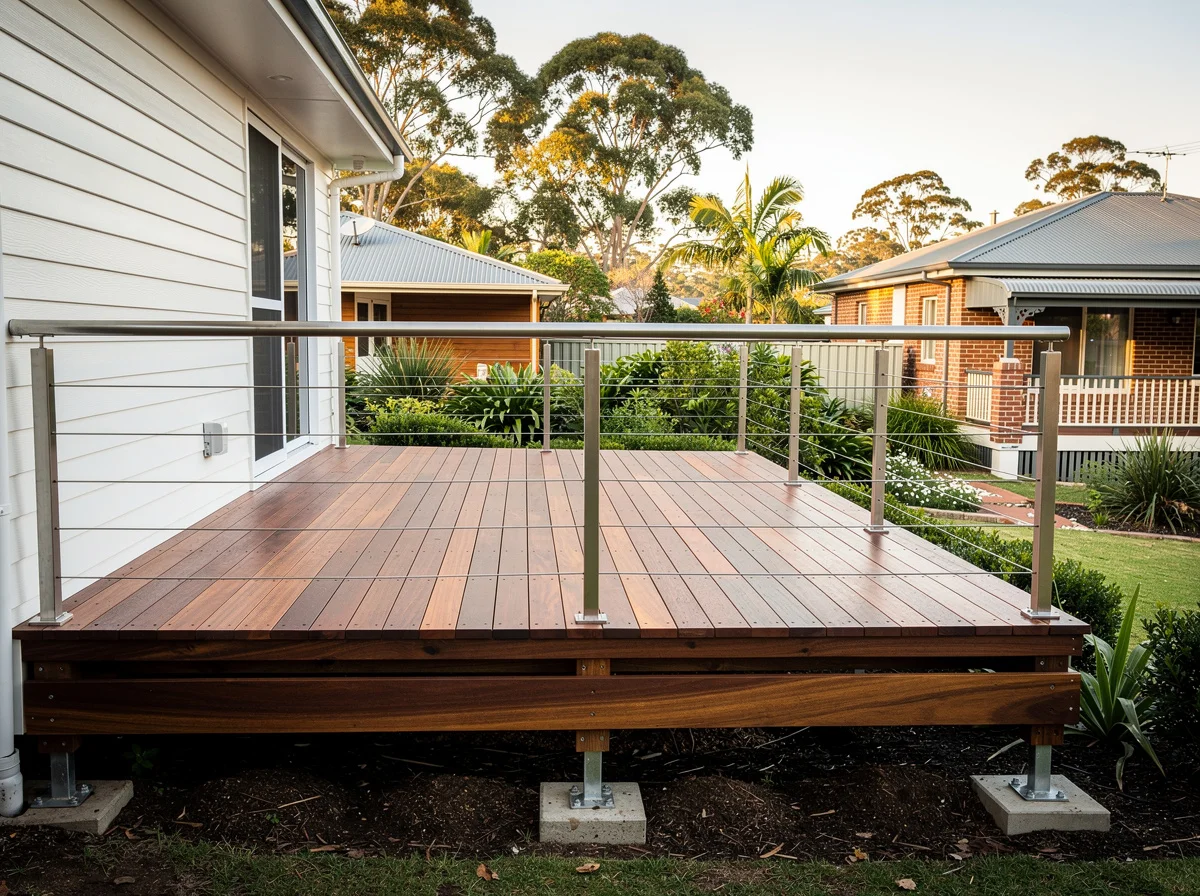 After
After 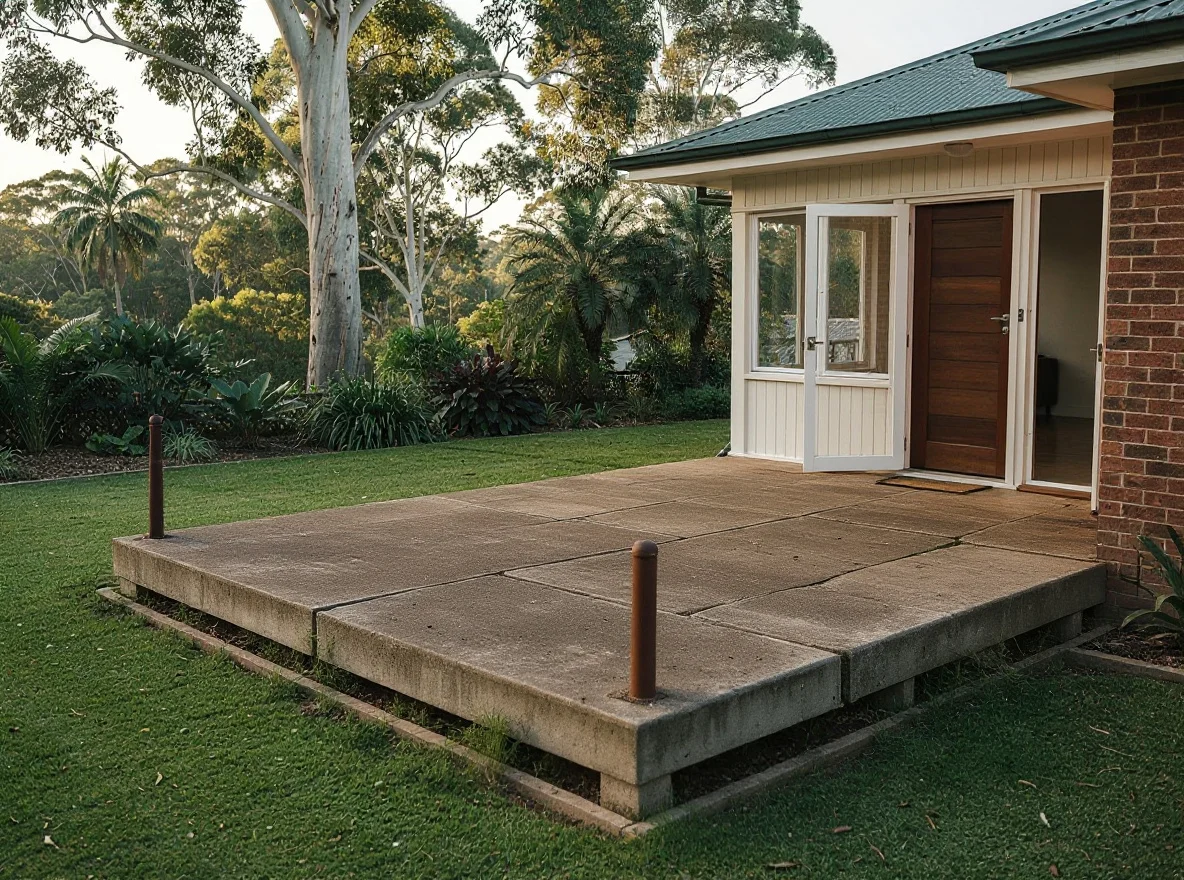 Before
 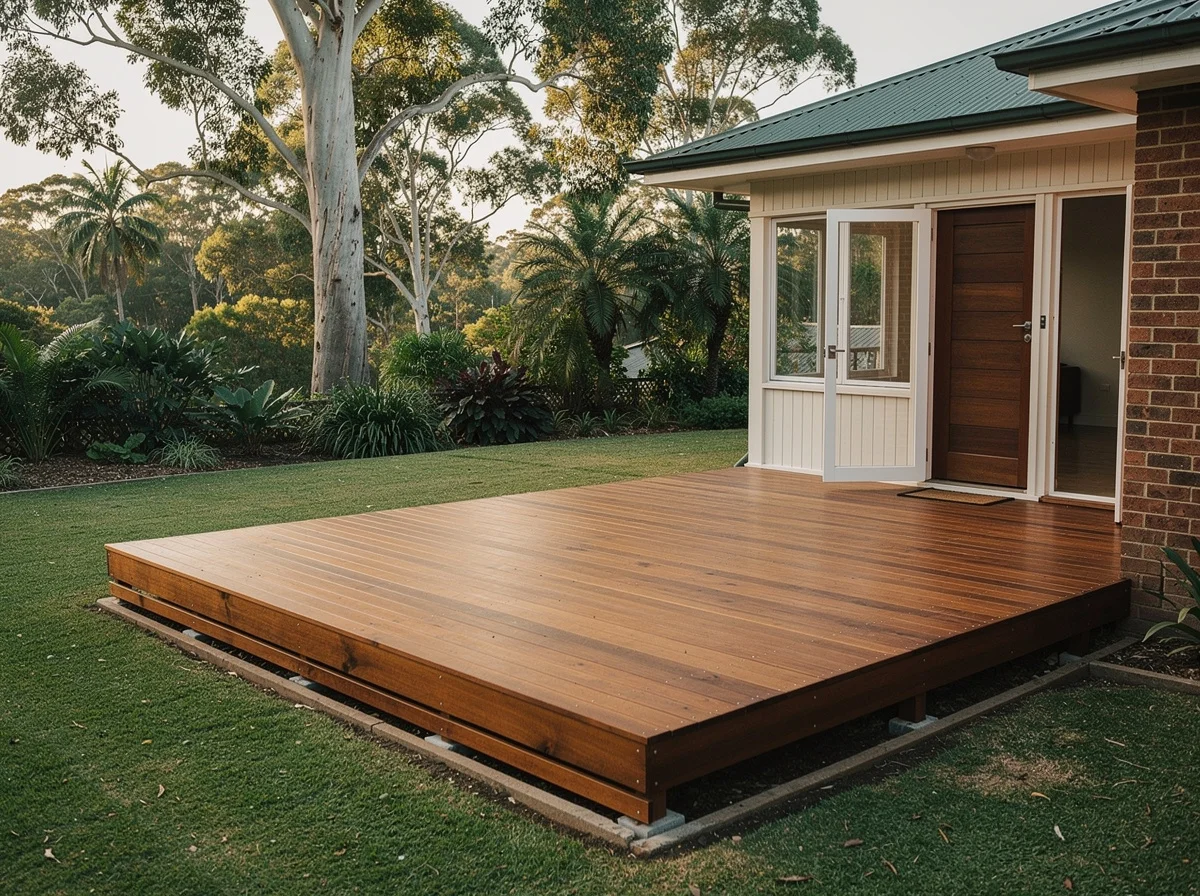 After
After Hardwood Decks: common questions.
Merbau, spotted gum or blackbutt, which should I pick?
How often does a hardwood deck need oiling?
Will the boards cup, gap or splinter over time?
Can you match or extend my existing hardwood deck?
Get a free, itemised quote you can actually read.
Tell us what you need. We’ll book a walkthrough and send a quote with the work itemised, not just a number.